Solutions overview · 6 capabilities
Six AI capabilities. One delivery team. Forty production systems shipped.
AiSPRY is built around the disciplines that move enterprise AI from pilot to production. Computer vision, forecasting, generative AI, agentic automation, MLOps, and strategy - engineered as one integrated practice, not six disconnected service lines. Every engagement is led by architects who have shipped before.
shipped since 2018
capabilities
served
India · Gulf · ASEAN
Capability map
How the six fit together.
Most engagements draw from two or three layers at once. The MLOps and data engineering backbone runs underneath everything - not because it's optional, but because no model survives production without it.
The six capabilities
Each one ships to production. Each one is led by a senior architect.
Click into any capability for the full picture - what we do, how we do it, the stack we build on, and the case studies that prove it works.
Computer Vision & Visual AI
YOLO detection ensembles, OCR pipelines, and multi-camera production systems for industrial inspection, road safety, healthcare imaging, and crowd analytics.
Forecasting & Predictive Analytics
Demand, price, load, and time-series forecasting at production scale - from energy markets to pharma supply chains. Models that survive regime change, not just hold-out tests.
Generative AI & Conversational AI
Retrieval-augmented chatbots, document intelligence, and domain-tuned LLM apps - built with grounded retrieval, evaluation harnesses, and guardrails that hold under regulatory scrutiny.
Agentic AI & Cognitive Automation
Multi-step workflow agents that read documents, query systems, and take action - for SLA monitoring, compliance triage, and operations automation. With observability built in.
MLOps & Data Engineering
The unglamorous backbone that makes everything else durable. Feature stores, model registries, drift monitoring, retraining pipelines, and the data plumbing that ML teams actually need.
AI Strategy & Consulting
For leaders who need to figure out where AI actually moves the needle - and where it doesn't. Use-case discovery, AI readiness audits, ROI modelling, and roadmap design with architects, not slide-makers.
Delivery model
A 5-stage path from problem to production.
Whatever capability you start with, the engagement model is the same: discovery first, prototype before commitment, production-grade infrastructure, and operate-iterate after launch.
Discovery
Architect-led workshops to scope the problem, audit data readiness, and define what success looks like in measurable terms.
Data foundation
Pipelines, feature engineering, and labelled datasets - built once, reused across the lifetime of the system.
Model design
Model selection, training, evaluation against business KPIs - not just hold-out accuracy. Failure modes mapped early.
Production deployment
Hardened APIs, observability, drift monitoring, retraining triggers, and rollback paths. Built on the MLOps backbone.
Operate & iterate
Monthly model reviews, performance reports, and a continuous feedback loop. The model gets better as the data grows.
Selected case studies
Production AI, across the six.
A small slice of the 40+ projects shipped. Each capability page links to the full set for that discipline.
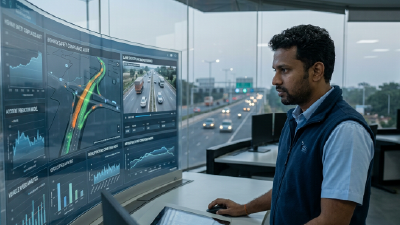
Road safety audit at network scale
YOLOv8/v11 ensembles detecting 8+ infrastructure types and 6.3M km of road network - POC live with YNM Safety pilot underway.
accuracy
production
classes

Real-time power trading intelligence
Demand, price, and load forecasting feeding live trading decisions across India's largest IPP portfolio. Now in production.
cadence
SLA
production

RAG-based learning companion
Domain-tuned conversational AI for technical education. Won "Best Use of AI in Education" at the 4th Global AI Summit & Awards 2024.
award
pattern
learners
Common questions
What people ask before they engage.
Most questions cluster around scope, pricing model, and how to start. Here are the ones that come up first.
Start with a 30-minute discovery call. Most problems map to two or three of the six capabilities, not one - for example, a "predictive maintenance" problem usually involves Forecasting plus Computer Vision plus the MLOps backbone. We help you draw that map before we propose anything.
Both work. We run multi-month production engagements (most of our case studies), and we also run focused 4-8 week sprints - for example, an MLOps health check, a strategy roadmap, or a CV proof-of-concept. The capability pages list typical engagement shapes for each.
We build with what's already there. We've shipped on AWS, Azure, GCP, and fully on-premise environments. Migration is occasionally part of the project, but never the default. The MLOps page goes into how we work with existing infrastructure.
Strategy and discovery are fixed-fee. Build engagements are time-and-materials with capped milestones. Production-operate engagements move to a monthly retainer once the system is live. Specifics depend on team size, data complexity, and SLA - we share a written estimate before any commitment.
Every engagement is led by a senior architect who has shipped a comparable system before. We staff with engineers, not BDRs or generalist consultants. The architect stays on the project from discovery through production operate - not just the first phase.
Six capabilities, one conversation. Start where it hurts most.
A focused 30-minute discussion with AiSPRY architects. Not a sales pitch - a working session on the problem you're trying to solve.