The infrastructure that keeps models alive.
MLOps and data engineering - the unglamorous foundation underneath every AiSPRY engagement. Feature stores, model registries, training orchestration, real-time inference APIs, drift monitoring, and the data platform underneath. Foundation work in every production deployment - no model survives long without it.
on this stack
SLA standard
per deployment

What this is
MLOps as system architecture, not Kubernetes cosplay.
Most AI projects that fail in production don't fail on the model - they fail on the data pipeline, the feature drift, the missing monitoring, the impossible retraining loop. AiSPRY's MLOps practice has been building durable production AI infrastructure since 2018 - opinionated, boring, and observable.
Data foundation first
Forty deployments have taught us this: most ML projects that fail, fail on data plumbing. We invest 4-6 weeks of every engagement in the data foundation - source-system inventory, ETL design, feature engineering, governance - before any model work.
Feature stores when they earn their keep
We don't deploy Feast on day one of every project. We deploy it when feature reuse, training-serving skew, or low-latency inference makes the complexity worth it. Many production systems run on simpler infrastructure.
Observability is the deployment, not an add-on
Drift detection, residual monitoring, prediction logging, and alerting all ship with the model - not in a follow-on phase. If we can't see what the model is doing in production, we can't keep it alive.
Cloud-portable by default
AWS, Azure, GCP, and on-prem all sit behind the same abstractions: Airflow, MLflow, Feast, FastAPI, dbt. Migration between clouds is a config change, not a rewrite. We've done it for clients with shifting infrastructure strategies.
How we do it
Six MLOps capabilities.
These six pillars are the backbone underneath every production deployment. Most engagements use four to six; the GMR data spine and HIES Oman use all six.
Training Pipelines
Orchestrated, reproducible training runs with versioned data, code, and hyperparameters. Every artefact is traceable; every run is reproducible from a single command.
Model Registry & CI/CD
Versioned model registry with staging-to-production promotion gates, automated evaluation, and rollback capability. Models ship through CI/CD, not via Slack messages.
Feature Stores
Online and offline feature stores for production ML - single source of truth for features, with point-in-time correctness for training and low-latency lookup for inference.
Real-Time Inference
Production inference APIs with autoscaling, batch + streaming support, request validation, and response logging. Triton for high-throughput GPU inference where it matters.
Observability & Drift
Prediction logging, residual monitoring, data drift detection (PSI, KS-stat), and concept drift alarms. Every production model has its own dashboard and alert routing.
Data Platform
The data layer underneath everything: ingestion, modelling, governance, and access control. dbt for transformations, Kafka for streaming, Spark for batch.
Use cases
Where MLOps moves the needle.
MLOps doesn't have flashy use cases - it has projects that didn't fail. The patterns below are the ones that recur across our forty deployments.
High-frequency trading-grade inference
Sub-second forecast inference for 96-block electricity markets, with auto-retrain pipelines, drift monitoring, and rollback gates. The MLOps spine underneath GMR Power Trading.
National-scale data platform
End-to-end data engineering platform for national statistics - household expenditure, prices, macroeconomic indicators - with governance, lineage, and forecast pipelines.
Edge-to-cloud inference pipelines
Models train in cloud GPUs, ship to Jetson edge devices, telemetry flows back through Kafka for retraining. The pipeline underneath Drishti and WDD.
Feature store rollouts
Feast feature stores deployed where feature reuse, training-serving skew, or low-latency lookup justify the complexity. Selective adoption - not everywhere.
Model registry & CI/CD setup
MLflow registry with staging-to-production promotion gates, automated evaluation, and rollback. The default starting point for clients with multiple models in production.
Drift monitoring & alerting
Production drift detection on every model - data drift, prediction drift, concept drift - with alert routing into existing on-call rotations.
Tech stack
The moving parts.
- AirflowWorkflow orchestration default
- MLflowExperiment tracking & registry
- Prefect & DagsterModern alternatives, used selectively
- DVCData & model versioning
- GitHub ActionsCI/CD for model releases
- FastAPIDefault inference API framework
- Triton Inference ServerHigh-throughput GPU serving
- BentoMLModel packaging & deployment
- FeastFeature store, when it earns its keep
- Redis & PostgreSQLOnline feature lookup & metadata
- KafkaStreaming data backbone
- Spark & dbtBatch processing & transformation
- Iceberg / Delta LakeOpen table formats
- Evidently & WhyLabsDrift detection
- Prometheus & GrafanaMetrics & dashboards
Selected work
Three systems, all in production.

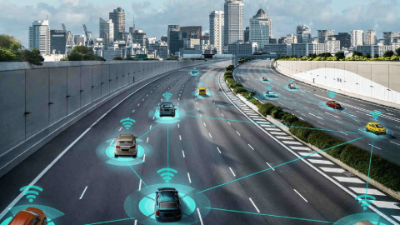
High-frequency forecasting infrastructure
End-to-end MLOps spine underneath GMR Power Trading: data ingestion from market feeds, feature store with point-in-time correctness, training pipelines, real-time inference, drift monitoring.
cadence
SLA
retrain
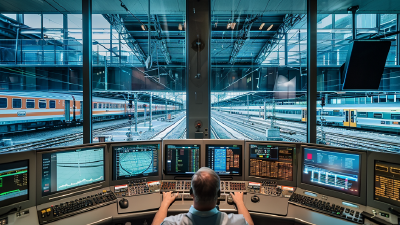
National statistics data platform
Data engineering platform for Oman's National Centre for Statistics & Information - household expenditure ingestion, governance, lineage, forecast pipelines, and a self-service analytics layer.
frequencies
NCSI
deploy
Vision system MLOps backbone
Models train in cloud GPUs, ship to Jetson edge devices, telemetry flows back through Kafka. The MLOps pattern underneath Drishti, WDD, and other edge CV deployments.
deployments
pipeline
updates
Frequently asked
Common questions about this capability.
Quick answers to what teams ask before bringing us in. Don't see your question? Talk to us directly.
No. Feature stores like Feast solve specific problems: feature reuse across models, training-serving skew, low-latency online lookup. If you don't have those problems yet, you don't need the complexity. Many of our production systems run on simpler infrastructure - a versioned data warehouse, a clean dbt layer, and FastAPI for serving. We deploy Feast when it earns its keep.
We design cloud-portable by default. The backbone - Airflow, MLflow, Feast, FastAPI, dbt - runs anywhere. Cloud-specific services (SageMaker, Vertex AI, Azure ML) get used selectively when they bring meaningful value, with the migration cost weighed up explicitly. Several clients have moved between clouds during our engagement; the portability is real.
The same backbone, deployed on Kubernetes or directly on VMs. We've done significant on-prem and air-gapped deployments - government, defense-adjacent, healthcare clients with non-negotiable data residency. The pattern is the same: Airflow, MLflow, FastAPI, Postgres. The hard part isn't the deployment - it's the operations handover.
Five things. (1) System metrics - latency, throughput, error rates. (2) Data quality - schema validation, null rates, distribution checks at ingestion. (3) Feature drift - PSI and KS-stat on training-vs-production feature distributions. (4) Prediction drift - distribution of predictions over time. (5) Concept drift - model performance vs. ground truth where it's available. Alerts route into existing on-call rotations.
Depends on starting state. Greenfield deployment of the full backbone - registry, pipelines, serving, monitoring - is typically 8-12 weeks. Slotting MLOps onto an existing system is usually 4-8 weeks for the core layers, then ongoing iteration. We don't sell long phase-2 engagements just to keep meters running; the goal is to hand off a maintainable system.
Both options. Some clients want full handover at the end of the engagement - we document, train, and walk away. Others retain us on a quarterly basis for upgrades, drift response, and platform evolution. We don't push managed-service contracts as a default; the choice is yours.
Got models in production? Let's talk infrastructure.
30-minute discussion with our MLOps architects. Bring your current setup - registry, pipelines, monitoring - and we'll point at the gaps that matter.