Five to eight hours of manual inspection, for every train
No continuous visibility into the locomotive cabin
Safety-critical commands fighting railway noise
Railways are one of the world’s largest, oldest, and most safety-critical operating environments. A national network runs 24×7 across thousands of locomotives, tens of thousands of wagons, and millions of voice exchanges on operational radio every year. The standard operating procedures that govern that environment exist because every one of them has historical roots in a near-miss or an actual incident.
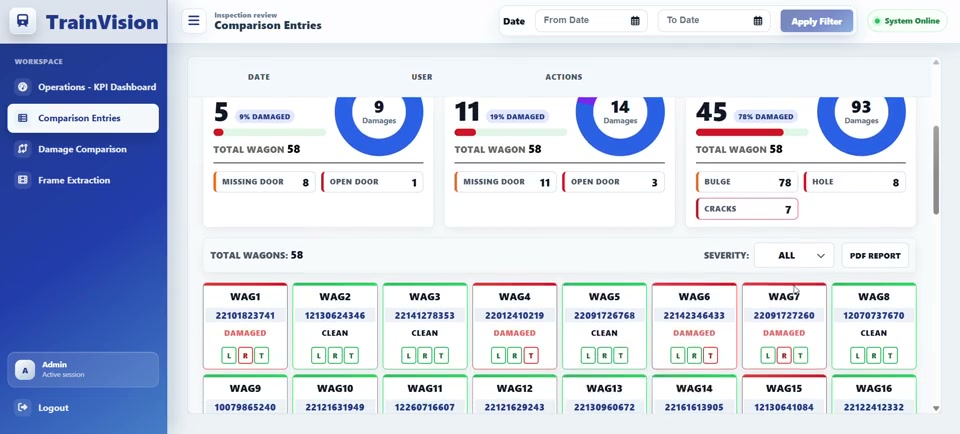
And yet what happens to the wagon as it moves through the gantry — the dent on the side panel, the bulge on the roof, the missing door — is reconstructed after the fact, by inspectors working through hours of footage across six camera views per train. The record depends on inspector fatigue, and when a wagon is damaged in transit the dispute between loader, unloader, and rail operator is unresolvable without an evidence-grade comparison of its condition at entry against its condition at exit.
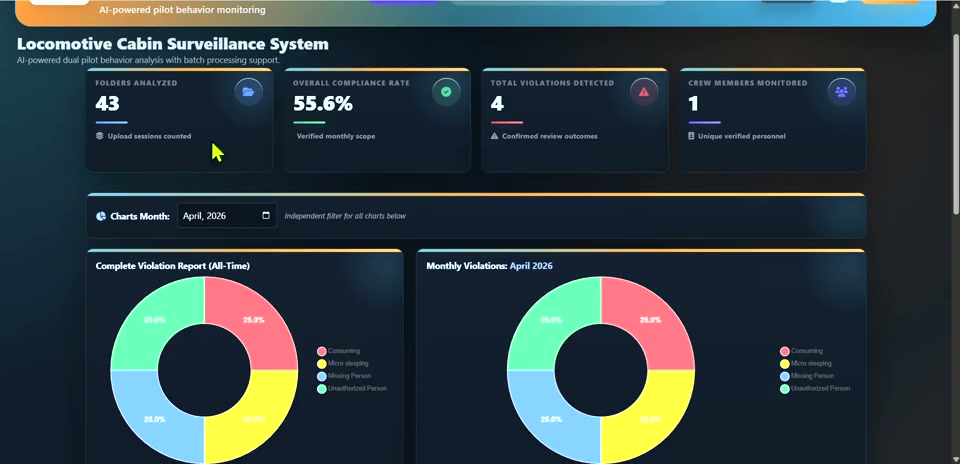
And yet what happens inside the locomotive cabin — mobile use, missing PPE, smoking, drowsiness, distraction — is sampled by occasional supervision, not continuously measured. Supervisors cannot ride every cab, investigations begin only once something has already gone wrong, and the long stretches of tunnel and hill section on the network rule out cloud inference for anything safety-critical.
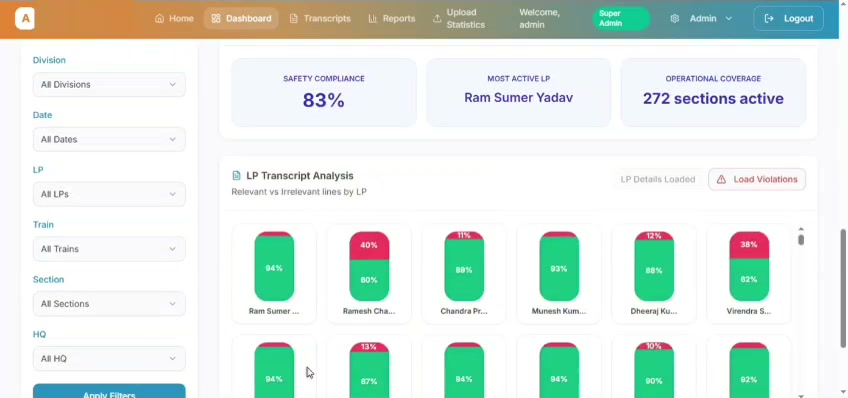
And yet what is said on the operational radio — the caution, the train number, the block clearance — is fighting a constant battle against engine roar, wheel–rail vibration, air-brake hiss, horns, wind, and platform crowd babble. Consumer-grade noise suppression is trained on office and street noise; on a railway it underperforms, and it often suppresses the voice along with the noise.
The structural problem is the same in each case: policy without continuous, evidence-grade observation. AiSPRY’s three engagements with the railways were each commissioned to close a different facet of that gap.
No continuous visibility into the cabin
Supervisors can’t ride every cab. Investigations begin only after something goes wrong. Self-reporting depends on the discipline the policy is trying to instill in the first place. Cabin compliance had to be sampled, not measured.
Operational radio fighting railway noise
Engine roar, wheel–rail vibration, air-brake hiss, horns, wind, and platform crowd babble compress the signal and erode the listener’s ability to extract critical words — train number, block, signal aspect, caution, stop.
5–8 hours per train of manual inspection
Manual wagon inspection across six camera views per train depends on inspector fatigue, produces inconsistent records, and is impossible to scale across the volume of freight movements on the national network.
Connectivity-constrained operating environment
Trains spend long stretches in tunnels, hill sections, and low-coverage areas. Cloud inference is not an option for safety-critical real-time monitoring — the system has to run at the edge or not at all.
Generic denoisers underperform on railways
Consumer-grade noise suppression is trained on office and street noise. It can’t handle impulsive horns, broadband engine roar, or reverberant tunnels — and it often suppresses voice along with noise. Railway-specific training is non-negotiable.
No audit trail for accountability disputes
When a wagon is damaged in transit, the dispute between loader, unloader, and rail operator is unresolvable without an evidence-grade comparison of the wagon’s condition at entry vs. exit on a specific journey.